I was working on a blogpost on books focusing on EdTech
people (the woman, the tasks…), but then I opened up YouTube and I saw that
president Trump had his first solo press conference.
I guess we can all benefit from Mike Caulfield's ebook (127 page) on web literacy for students (online version) or here for other versions including pdf), a fabulous book with lots of links and useful actions to become (more) web literate (thank you Stephen Downes for bringing it to my attention).
I guess we can all benefit from Mike Caulfield's ebook (127 page) on web literacy for students (online version) or here for other versions including pdf), a fabulous book with lots of links and useful actions to become (more) web literate (thank you Stephen Downes for bringing it to my attention).
After watching it, I thought
there was a clear need (for me as an avid supporter of education) to refer to
initiatives on the topic of real and fake news, because honestly I do not mind if someone calls something fake or real, as long is that statement is followed by clear arguments describing what you think is fake about it, and why. Before
doing that, I want to share the reason for this shift in attention.
I love Amerika, for several reasons: where Europe stays
divided, the United States have managed to get its nations to work together, while
leaving enough federal freedom to adapt specific topics according to individual
nation’s believes; I have worked and honestly like to work with Americans (of
all backgrounds) and American organisations, truly I am in complete awe of the
Bill of Rights, and the way the constitution is securing freedom for all. I
know that a goal as ‘freedom for all’ is difficult to attain, but at least it
is an openly set vision, put on paper. I mean, I truly respect such strong
incentive to promote freedom for all citizens within a legal framework and the
will to achieve that freedom. And due to this love for the United States, I
felt that Trump is okay. In democratic freedom, the outcome might not be of
anyone’s liking, but … history has shown that democratic freedom can swing in a
lot of ways and that it this diversity nurtures new ideas and insights along
the way.
However, while watching the press conference I got more and
more surprised by what was said and how: there were clear discriminatory
references, which I do not think befit a President of all the American people. But
okay, to each his own and rhetorical styles can differ (wow, can they differ), but
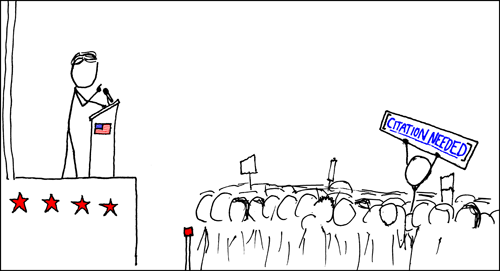
the ongoing remark and reference on Fake News that kept coming up as an excuse
and used as a non-sequitur at any point during the press conference just got to
me. Manipulation has many faces, and only education can help built critical
minds that will be able to judge for themselves, and as such be able to
distinguish real from fake news. To me, even if you refer to ‘this is fake news’,
I want to hear just exactly what you mean: which part of what news is fake and
why. Enlighten me would be the general idea.
Fake news and believing it: status
A Stanford study released in November 2016, concluded that 82% of middle-schoolers couldn’t distinguish between an
ad labeled “sponsored content” and a real news story on a website. Which seems to indicate that somewhere we are not addressing media or
digital literacy very well. On the reasons why this lack of media literacy is occuring, I like the viewpoint of Crystle Martin who looks at misinformation and warcraft in this article; saying:
Teaching information literacy, the process of determining the quality and source of information, has been an emphasis of the American Association of School Librarians for decades. However, teaching of information literacy in school has declined as the number of librarians in schools has declined.
Luckily, there are some opinions
and initiatives on distinguishing between fake and real news. Danah Boyd had
another look at the history of media literacy, focusing on the cultural context
of information consumption that were created over the last 30 years.
Danah shared her conclusions in a blogpost on 17 January 2017, entitled 'Did media literacy backfire?' She concluded
that media literacy had backfired, in part as it was built upon assumptions (e.g.
only media X, Y and Z deliver real news) which often does not relate to the
thinking of groups of people that prefer other news sites A, B and C.
Danah describes it very well:
Think about how this might play out in communities where the “liberal media” is viewed with disdain as an untrustworthy source of information…or in those where science is seen as contradicting the knowledge of religious people…or where degrees are viewed as a weapon of the elite to justify oppression of working people. Needless to say, not everyone agrees on what makes a trusted source.
The cultural and ethical logic each of us has, is instilled
in us from a very early age. This also means we look upon specific thinking as
being ‘right’ or ‘wrong’. And to be honest, I do not feel this cultural/ethical
mind set will deter all of us from being able to become truly media literate.
As long as we talk to people across the board. As long as colliding thoughts fuel
a dialogue, we will learn from each other and be able to understand each other
in better ways (yes, I am one of those people that think that dialogue helps
learning, and results in increased understanding, thank you Socrates).
If this is the case, than we need to do a better job of
improving media literacy, including listening to people with other opinions and
how they see it. It is a bit like the old days, where the people from the neighborhood
go to the pub, the barbershop, or any get together were people with different
opinions meet, yet feel appreciated even during heated debates.
Maha Bali, in her blogpost “Fake news, not your main problem”
touches on the difficulty of understanding all levels of the reports provided
in the news and other media. Sometimes it does demand intellectual background
(take the Guardian, I often have to look up definitions, historical fragments
etc. to understand a full article, it is tough on time and tough to get
through, but … sometimes I think it is worth the effort). Maha Bali is a prolific,
and very knowledgeable researcher/educator. She touches on the philosophical implication
of ‘post-truth’ and if you are interested, her thesis subject on critical
thinking (which she refers to in her blogpost) will probably be a wonderful
read (too difficult for me). So, both Maha and Danah refer to the personal being not only
political, but also coloring each of our personal critical media literacies.
If
media literacy depends on personally developing skills to distinguish fake (with
some truth in it) from real (with some lies in it), I gladly refer to some guidelines
provided by Stephen Downes, as they are personal. One of the statements I would
think is pivotal to distinguish between fake and real news, is understanding
that truth is not limited to one or more media papers/sites/organisations, it
is about analysing one bit of news at a time. It is not the organisation that
is authoritative at all times, it is the single news item that is true or at
least as real as it can get. So, here is a list of actions put forward by
Stephen Downes on detecting fake news :
Trust no one, look for the direct evidence (verification, confirmation,
replication, falsification), avoid error (with major sources of error being:
prediction, relevance, precision, perspective), take names (based on trust,
evidence and errors), and as a final rule he suggests to diversify in sources
(which I really believe in, the pub analogy).
Another personal take on detecting fake news comes from Tim O'Reilly who describes a personal story, and while doing so he sheds some light on how an algorithm might be involved.
Thinking about algorithms, you can also turn to some fake news detectors:
The BS detector: a fabulous extension to the Mozilla browser.
Looks at extreme bias, conspiracy theory, junk science, hate group, clickbait,
rumor mill… http://bsdetector.tech/
Snopes: started out as a website focused on detecting urban
legends, and turned into an amazing fact checking website (amazing as you can
follow the process of how they look at a specific item and then decide whether
it is fake). ( http://www.snopes.com/
And finally, for those who like to become practical asap: a
lesson plan on fake news provided by KQED http://ww2.kqed.org/lowdown/wp-content/uploads/sites/26/2016/12/Fake-news-lesson-plan.pdf
In my view, the increase in accepting the idea of fake news
is related to the increased divide within society. So, in a way I agree with
Danah Boyd: we read and agree with specific people and news sources, and so we
filter our sources to those people and media. Seldom do we read up on sources from
media we do not agree with, or people we disagree with. It used to be different,
as discussions around specific topics were discussed in our community, with a
mix of ideas and preferences.
So maybe media literacy could be done on a community level,
where everyone gets together and shares their opinion on certain topics. We
recreate the local pub or café, where everyone meets and gets into arguments on
what they believe (or not). Media literacy – to me – is about embracing
diversity of opinion, listening, seeing the arguments from the other side and …
making up your own mind again.
So, coming back to president Trumps referencing to fake news.
In terms of increasing media literacy, I do not have a problem with referencing
to something that is seen as fake news, I do have a problem with that fact not
being explained: what is fake about it? Why? And again,
with saying that, I mean a real explanation, not simply repeating ‘this is fake
news. It is. I tell you it is’ (feel free to imagine the tone of voice that
such a sentence might be delivered in), now give me the facts, because I do
want to know why you or anyone else is labeling something as true or false.